The Orchestration Inflection Point: Moving from Single AI Pilots to Multi-Agent Enterprise Execution
As we cross into the second half of 2026, a quiet but brutal reality check is sweeping through corporate boardrooms. Worldwide AI spending is forecast to reach $2.52 trillion this year—yet a major mid-2026 Kyndryl global study reveals that only 32% of organizations have achieved at least one of their top two AI obje...
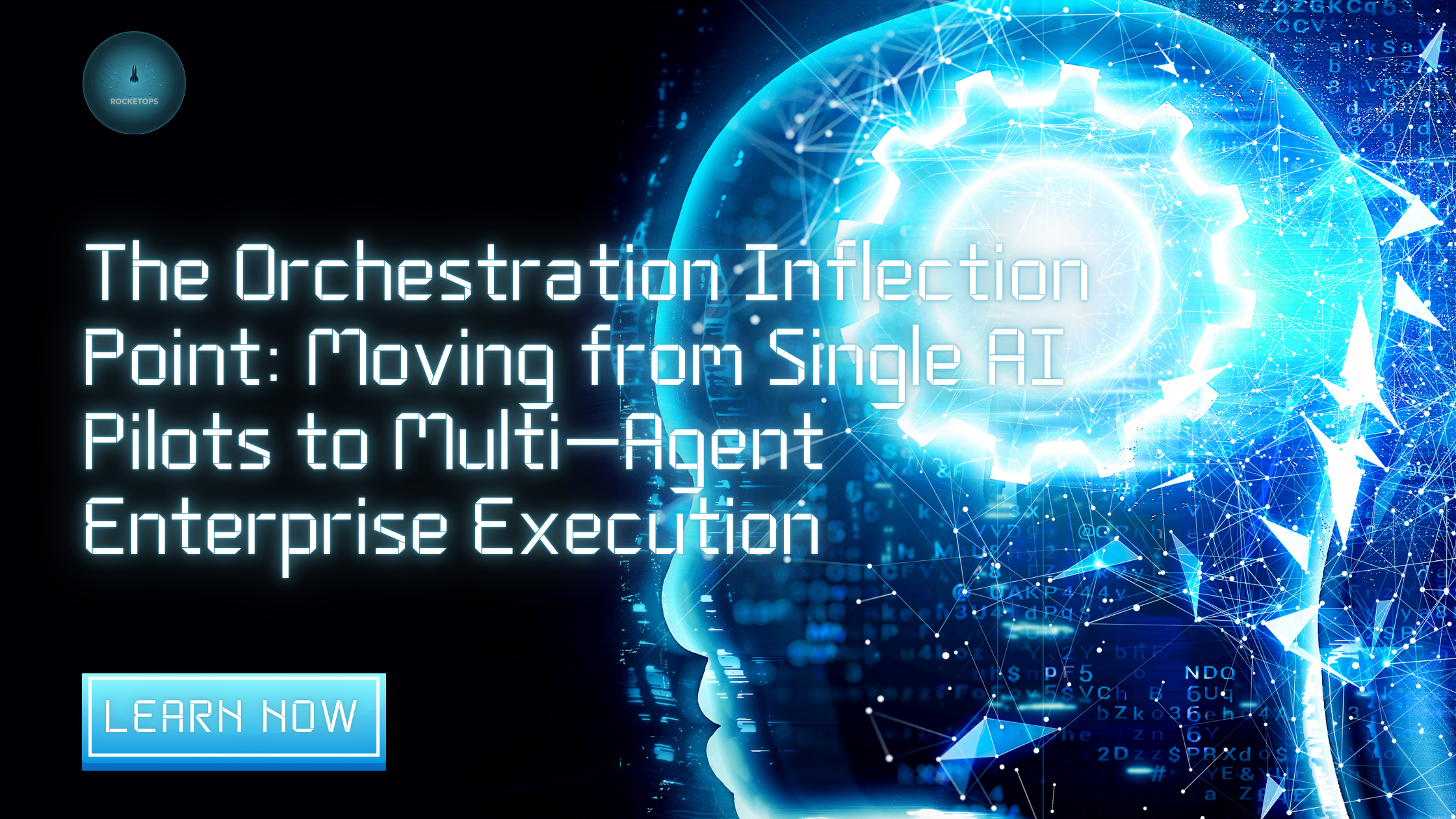
As we cross into the second half of 2026, a quiet but brutal reality check is sweeping through corporate boardrooms. Worldwide AI spending is forecast to reach $2.52 trillion this year—yet a major mid-2026 Kyndryl global study reveals that only 32% of organizations have achieved at least one of their top two AI objectives.
The pilot phase is officially dead. Monolithic, single-prompt chatbots that summarize text or write polite emails have failed to deliver a measurable impact on bottom-line business margins.
The companies pulling ahead are not building bigger prompts; they are investing in AI Agent Orchestration Layers.
According to Databricks’ 2026 State of AI Agents Report, the industry has seen a 327% surge in multi-agent adoption within a single four-month window. The question for enterprise leaders is no longer whether an AI agent can perform a single task. The defining competitive divide of 2026 is how you coordinate, govern, and scale hundreds of specialized digital entities to execute end-to-end operational workflows.
At RocketOps AI, we are building the control planes that turn this complexity into structured, high-velocity execution. Here is how multi-agent coordination is redefining enterprise software.
The Shift from Isolated Tasks to Coordinated Assembly Lines
Early corporate AI implementations suffered from structural isolation. An application might feature a small AI widget that extracts data from a invoice PDF, but a human still had to copy that data, cross-reference it with a Bill of Quantities (BOQ), check vendor contract compliance, and manually log it into an ERP database.
Isolated bots shrink individual task time, but they do nothing to shrink the broader Execution Gap.
True operational velocity requires a digital assembly line. Advanced orchestration frameworks (such as Microsoft AutoGen, CrewAI, and LangGraph) are designed to link distinct, highly specialized agents into unified, autonomous networks. Rather than relying on a single general-purpose model, complex business processes are broken down and handed to a team of digital experts:
-
The Manager Agent: Ingests the broad enterprise directive (e.g., "Resolve the structural steel procurement delay at Site 3").
-
The Sourcing Agent: Calls an API via the Model Context Protocol (MCP) to extract approved vendor catalogs and pricing histories.
-
The Risk Validation Agent: Evaluates incoming supplier quotes against historical margin parameters and lead-time constraints.
-
The Governance Agent: Checks the proposed transaction against corporate spending limits and flags it for human-in-the-loop sign-off.
By establishing concrete Agent-to-Agent (A2A) handoff protocols, operations run continuously at machine speed without losing contextual depth or resetting progress.
The Four Pillars of Enterprise Agent Orchestration
To move multi-agent networks out of local developer sandboxes and into mission-critical heavy industry environments, your architecture must be built on four core layers:
1. The Knowledge Fabric
Agents cannot execute logical tasks with fragmented data. The orchestration layer must tap into a unified knowledge fabric—a secure architecture that maps databases, live ERP feeds, and unstructured document repositories into a structured, vector-ready ecosystem.
2. State Management & Routing Logic
When multiple agents collaborate in parallel, data cannot stall. The orchestrator serves as the runtime brain, determining which worker runs next, resolving conflicts if parallel agents return clashing supplier bids, and preserving long-running workflow memory.
3. Agentic Security & Tool Guardrails
Giving an autonomous piece of software access to corporate infrastructure introduces new threat vectors, such as prompt injections and tool poisoning. Production-grade orchestration enforces a gateway layer that applies rate limits, access keys, and deterministic bounds to what an agent can and cannot modify.
4. Forensic Observability
Standard application monitoring tools fail in agentic environments because they only capture standard API requests, not the reasoning behind them. Enterprise orchestrators require dedicated trace logging that sequentially documents every tool call, decision chain, and inter-agent communication for auditing purposes.
RocketOps AI: Building the System of Action
At RocketOps AI, we specialize in deploying governed, high-performance execution layers right over your legacy data architectures. We understand that legacy enterprise software is excellent at storing records, but lacks the speed required to navigate volatile modern supply chains.
-
The Concrete Engine: Our core sovereign orchestrator. It acts as an air-gapped gateway directly next to your local networks, keeping your data residency completely intact within national borders while letting specialized multi-agent systems run end-to-end procurement and logistics workflows.
-
BuildOS: A commercial frontend engineered to pull fragmented bills of quantities, vendor qualifications, and design documents out of isolated silos and format them into an AI-ready knowledge fabric.
-
FuelTrack Pro: Extending orchestrated agent logic straight to field operations, dynamically balancing fleet allocations and cutting down on expensive logistics friction.
Stop Prototyping. Start Orchestrating.
The companies that succeed in the remaining months of 2026 will not be those chasing sweeping, multi-year cloud overhauls. They will be the strategic operators who target distinct operational bottlenecks and use orchestrated multi-agent systems to eliminate human administrative delays.
If your human teams are still acting as the manual bridges between your databases and your suppliers, you are losing vital margin every single day.
Let's modernize your operational stack.
The engineering team at RocketOps AI is conducting 15-Minute T+0 Architecture Reviews for industrial enterprise leaders. We will audit your manual data flows, expose where single-agent solutions fail, and provide an actionable roadmap to deploy a fully governed, sovereign multi-agent execution layer behind your secure corporate firewall.


