ERP vs AI OS: The Complete Comparison Guide for 2026 | RocketOps
Legacy ERPs tell you what went wrong yesterday. An AI Operating System fixes the problem today. Here is the definitive technical and operational comparison between passive enterprise software and active, autonomous AI infrastructure.
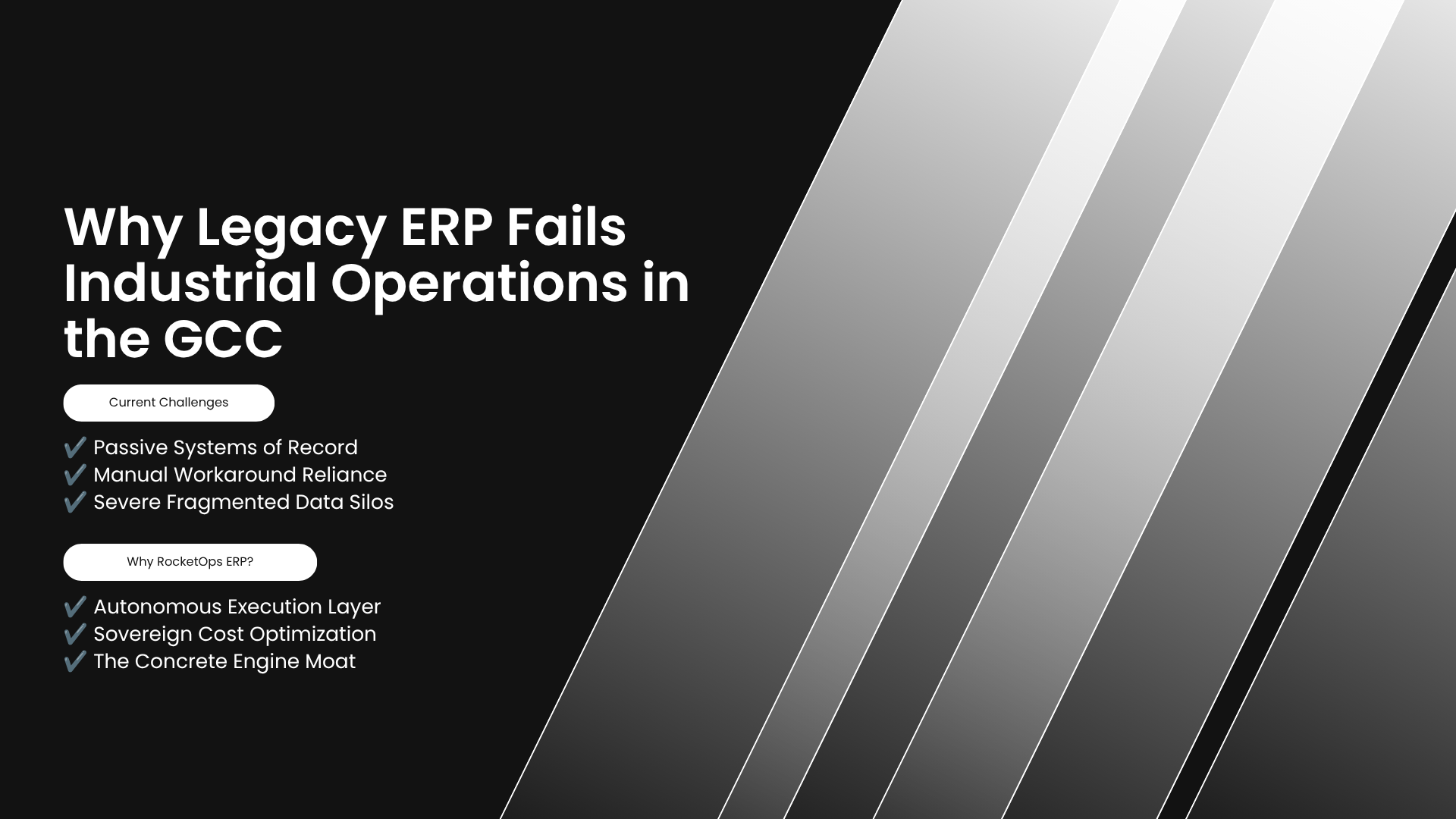
For the last two decades, the operational backbone of the global enterprise has been the Enterprise Resource Planning (ERP) system. Heavy industry and construction giants across the GCC have poured millions into SAP and Oracle implementations to digitize their operations, secure data sovereignty, and gain visibility over their supply chains.
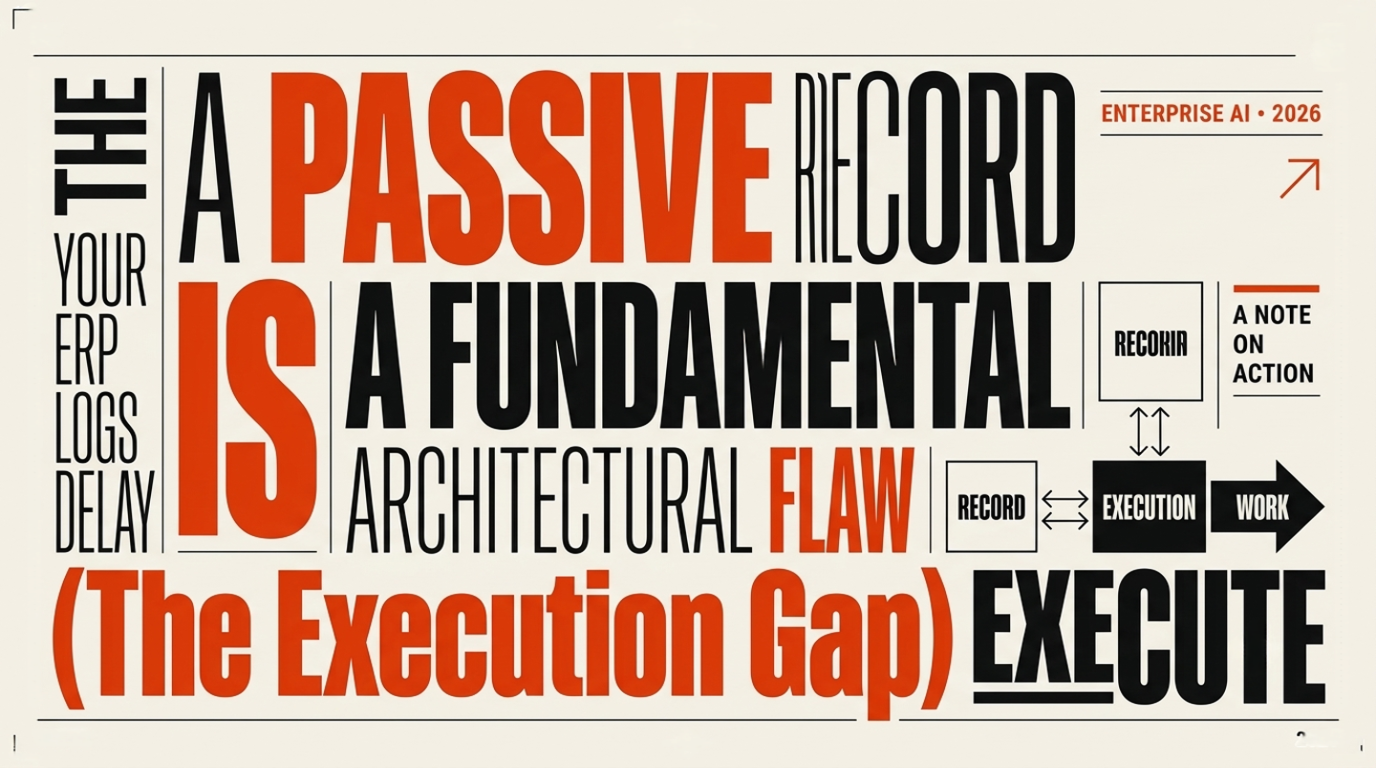
However, as we move through 2026, a hard truth has emerged: visibility does not equal execution.
While legacy ERP systems are excellent at storing master data and tracking historical financials, they are fundamentally passive. They require an army of human operators to input data, read dashboards, and manually execute every logistical pivot.
Enter the AI Operating System (AI OS). By layering an autonomous execution layer over your enterprise data, an AI OS shifts your infrastructure from a passive system of record to an active system of action.
Here is the complete technical and operational comparison between a legacy ERP and a modern AI OS, and why the construction sector is rapidly making the switch.
1. Core Architecture: Passive vs. Active
The fundamental difference between an ERP and an AI OS lies in how they treat data.
Legacy ERP Systems: The "History Book"
An ERP is a centralized relational database. Whether you are using Oracle, SAP, or Microsoft Dynamics, the architecture relies on humans to feed it. If a supplier delays a concrete shipment by three days, a human must manually log that delay into the materials management module. The ERP then updates a dashboard, flashing red to warn the project manager of a schedule clash.
The ERP's job ends there. It simply records the error and waits for human intervention.
AI Operating System: The Autonomous Execution Layer
An AI OS, such as the RocketOps Concrete Engine, does not just store data—it acts on it. When deployed on-premise, it functions as an autonomous execution layer.
When that same concrete shipment is delayed, the AI OS detects the anomaly instantly via API or email ingestion. It does not wait for a human to read a dashboard. Instead, its specialized agents autonomously parse the approved vendor list, issue Requests for Quotation (RFQs) to local alternatives, score the bids based on historical pricing, and prepare the new Purchase Order (PO)—all in milliseconds.
2. Speed and "The Execution Gap"
We define the time between a system identifying a problem and a human executing the solution as the Execution Gap.
In construction mega-projects, this gap is where project margins bleed out. If a logistics reroute takes three days of emails and WhatsApp messages to finalize, your multi-million dollar site sits idle.
-
ERP Execution: Relies entirely on human discipline. Fast decisions are bottlenecked by manual data entry and cross-departmental communication silos.
-
AI OS Execution: Operates at machine speed. Because the AI OS has pre-configured business logic and constraints, it can execute high-volume, repetitive tasks (like invoice reconciliation or fleet rerouting) with zero latency.
3. Data Sovereignty and Security
For GCC enterprise tech, data sovereignty is non-negotiable. Sending proprietary Bills of Quantities (BOQs) to public cloud LLMs poses a massive security threat.
-
Cloud ERPs: Often rely on broad cloud routing that can complicate strict national data residency mandates.
-
On-Premise AI OS: A true enterprise AI OS is deployed strictly on-premise or in an air-gapped environment. The inference engines and LLMs operate entirely behind your corporate firewall, ensuring zero data egress. Your operational intelligence remains exclusively yours.
The Complete Comparison Matrix
To summarize the architectural shift, here is the feature-by-feature breakdown of legacy enterprise software versus modern autonomous infrastructure.
| Feature / Capability | Legacy ERP (SAP, Oracle) | AI Operating System (AI OS) |
| Primary Function | System of Record (Passive) | System of Action (Active) |
| Workflow Trigger | Manual human data entry | Autonomous event detection |
| Response to Disruptions | Updates dashboards / flags errors | Executes solutions autonomously |
| Procurement Speed | Days / Weeks (Manual RFQs) | Milliseconds (Agent-driven) |
| Cost Control | Lagging indicator (End of month) | Real-time variance reconciliation |
| User Interface | Complex modules & rigid forms | Natural language & omni-prompt |
| Implementation Focus | Software training & human discipline | Process automation & agent tuning |
Do You Need to Replace Your ERP?
The most common misconception in enterprise digital transformation is that adopting an AI OS requires "ripping and replacing" your existing ERP.
It does not.
The strongest architecture in 2026 is a hybrid stack. Your legacy ERP remains the foundational database-the reliable system of record for your master data. The AI OS sits directly on top of it, acting as the intelligent execution brain. It reads the ERP data, autonomously executes the necessary operational tasks, and writes the results back into the ERP bidirectionally.
You do not need to tear out SAP or Oracle; you simply need to stop relying on humans to manually drive them.
The Bottom Line
A construction enterprise running solely on a legacy ERP is driving via the rearview mirror. You have perfect visibility into what went wrong yesterday, but you lack the agility to fix what is breaking today.
By deploying an on-premise AI Operating System, GCC construction leaders are closing the Execution Gap, replacing human variance with machine-level discipline, and securing their margins at correct speed.