System of Record vs. System of Action: The Missing Layer in Enterprise Software
Why are multi-million dollar ERP rollouts failing to drive agility? Discover the critical architectural distinction between holding data and executing work.
Every year, global enterprises pour billions of dollars into modernization. They upgrade their core Enterprise Resource Planning (ERP) systems, migrate massive databases to the cloud, and build beautifully polished business intelligence dashboards.
Yet, if you walk into the operations room of a tier-1 construction, manufacturing, or logistics enterprise, the reality on the ground hasn’t changed.
The executive suite is looking at a multi-million dollar dashboard. Meanwhile, the actual, day-to-day execution of the business is still running on fragmented Excel spreadsheets, manual data entry, and frantic WhatsApp groups.
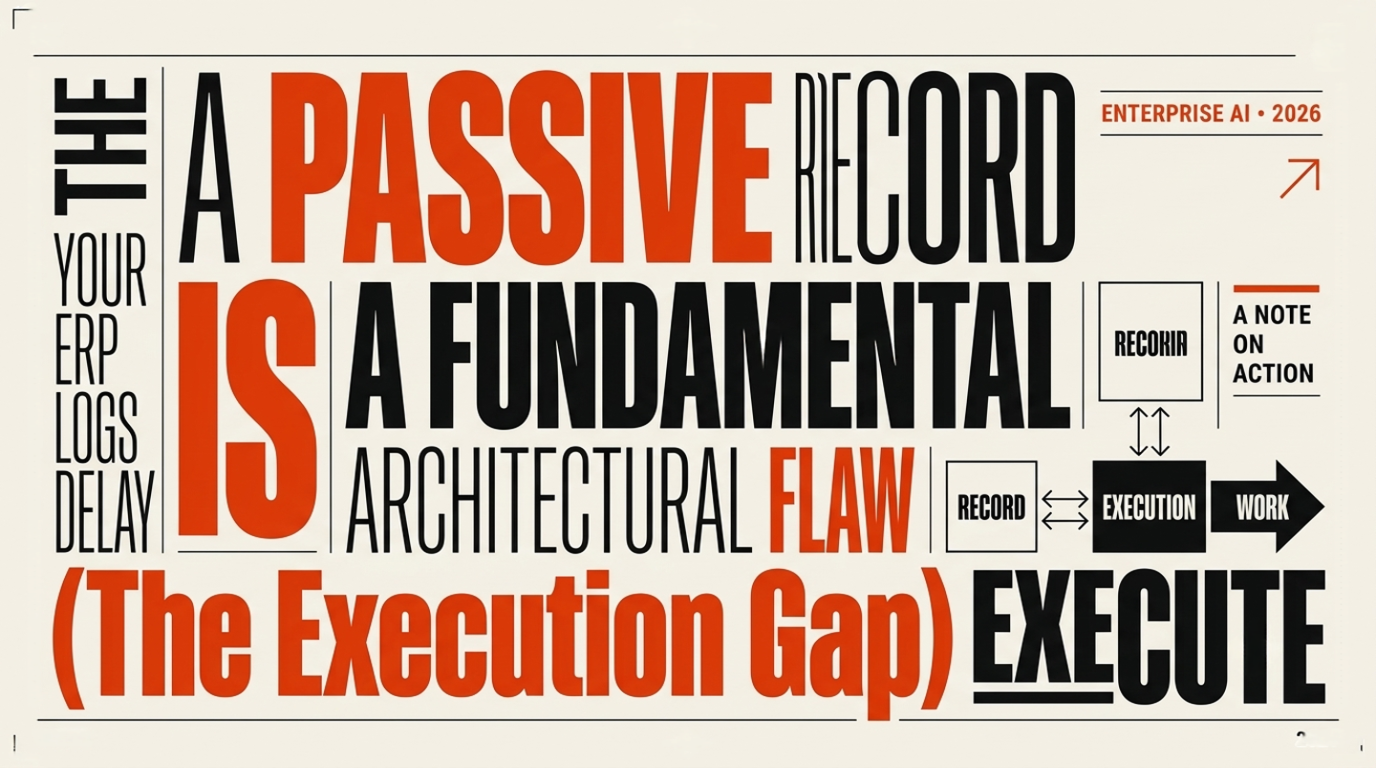
This isn't a failure of talent, and it isn't a failure of budget. It is a fundamental architectural flaw.
Enterprises are treating their System of Record as if it were a System of Action.
The Core Deficit: What is a System of Record?
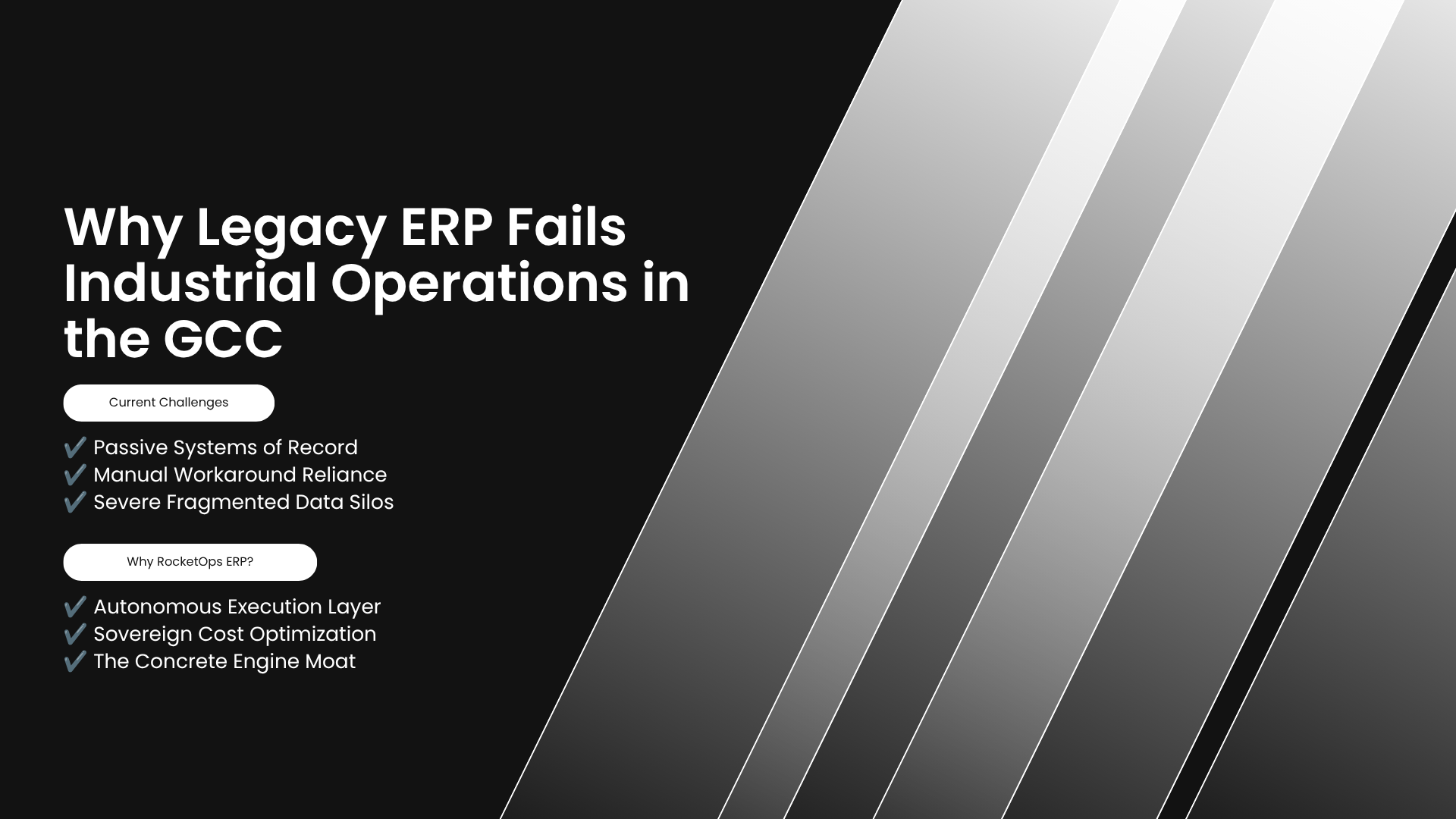
Your legacy ERP (whether it is SAP, Oracle, Odoo, or a custom database) is a world-class history book. It is designed to be a single source of truth—holding master data, tracking inventory, logging financials, and maintaining governance.
It excels at telling you exactly what went wrong yesterday.
But a System of Record is inherently passive. It does not drive; it watches.
When a supply chain disruption hits an industrial site—such as a critical steel shipment being delayed—the ERP does exactly what it was built to do. It logs the delay, updates the database, and perhaps turns a dashboard indicator from green to red.
Then, it sits there. It waits.
To fix that delay, a human operator must step in. The human has to log into the database, extract the Bill of Quantities (BOQ), manually email five alternative vendors, wait for unstructured PDF bids to return, copy-paste those numbers into a scoring matrix, and manually key a new Purchase Order back into the ERP.
By the time the solution is executed, days have passed. Cranes have sat idle. Margins have bled out. The database worked perfectly, but the business lost capital. We call this The Execution Gap.
Enter the System of Action
A System of Action does not replace your legacy database. It layers directly on top of it to remove the human bottleneck from high-velocity tactical workflows.
While a System of Record focuses on data integrity, a System of Action focuses on workflow velocity.
Instead of forcing a human operator to act as the manual bridge between an isolated database and an external supplier, a System of Action uses autonomous AI orchestration to execute the work at machine speed.
When that exact same steel delay hits a system armed with an active execution layer, the workflow changes completely:
-
Autonomous Ingestion: The AI execution layer continuously reads the ERP data in real-time. The millisecond the delay is registered, the system steps in.
-
Machine-Speed Resolution: Rather than just flashing a warning light, an autonomous agent parses the approved vendor taxonomy, issues automated RFQs, extracts pricing from incoming bids, and applies your custom multi-variable risk logic.
-
Instant Write-Back: The agent drafts the optimal, rescheduled Purchase Order and hands it to the human director. The human clicks "Approve," and the data is securely written back to the legacy ERP.
Hours of manual administrative friction are compressed into a few seconds of autonomous execution.
Why "Ripping and Replacing" is a Mistake
When enterprise leaders realize their software is sluggish, tech consultants often give them the most expensive advice possible: Rip out the old ERP and deploy a newer, shinier one.
This is a catastrophic trap. Ripping out a foundational system of record causes immense operational friction, risks data corruption, and rarely solves the actual problem. The new ERP will still just be a passive database—it will just have a more modern interface.
The solution is not to replace the engine; it is to automate the steering wheel.
By maintaining your legacy ERP as the foundational System of Record and layering a custom System of Action over it, you achieve modern, AI-driven agility without the risk, cost, or downtime of a complete replatforming.
The RocketOps Standard: Turning Data into Action
At RocketOps, we build the execution layer for heavy industry.
Our enterprise products—including BuildOS, FuelTrack Pro, and our sovereign Concrete Engine—are engineered to serve as your enterprise System of Action. We integrate bi-directionally with your existing databases, keeping your master data safe and compliant behind your corporate firewall while deploying autonomous agents to handle the heavy lifting.
Stop buying passive software that just watches your operations fail. Keep your database, eliminate the manual work, and deploy an execution engine that drives the ship.
Is your enterprise trapped in the Execution Gap?
If your operations still rely on manual data routing to bridge your tech stack, let’s map out a solution. RocketOps is currently hosting 15-Minute Technical Whiteboard Sessions for enterprise COOs and Directors to show you exactly how to layer an autonomous execution engine over your current ERP.
???? Book Your Technical Scoping Session with RocketOps Today