
How PROCUREMENT.AGENT Awards Construction Contracts Autonomously
Manual bid scoring is killing GCC construction margins. Learn how an on-premise AI OS uses the PROCUREMENT.AGENT to autonomously score bids and award contracts in milliseconds.
If you look at the procurement department of any major GCC construction enterprise, you will find highly paid directors acting as human calculators.
When a critical material request is triggered, procurement teams spend days gathering bids from suppliers. Once the quotes arrive via PDF or email, the manual labor truly begins. A human must extract the pricing, normalize the data into an Excel matrix, compare lead times, weigh supplier reliability, and calculate the optimal award allocation.
By the time the contract is manually awarded, three days have passed, site progress has stalled, and the project margin has bled.
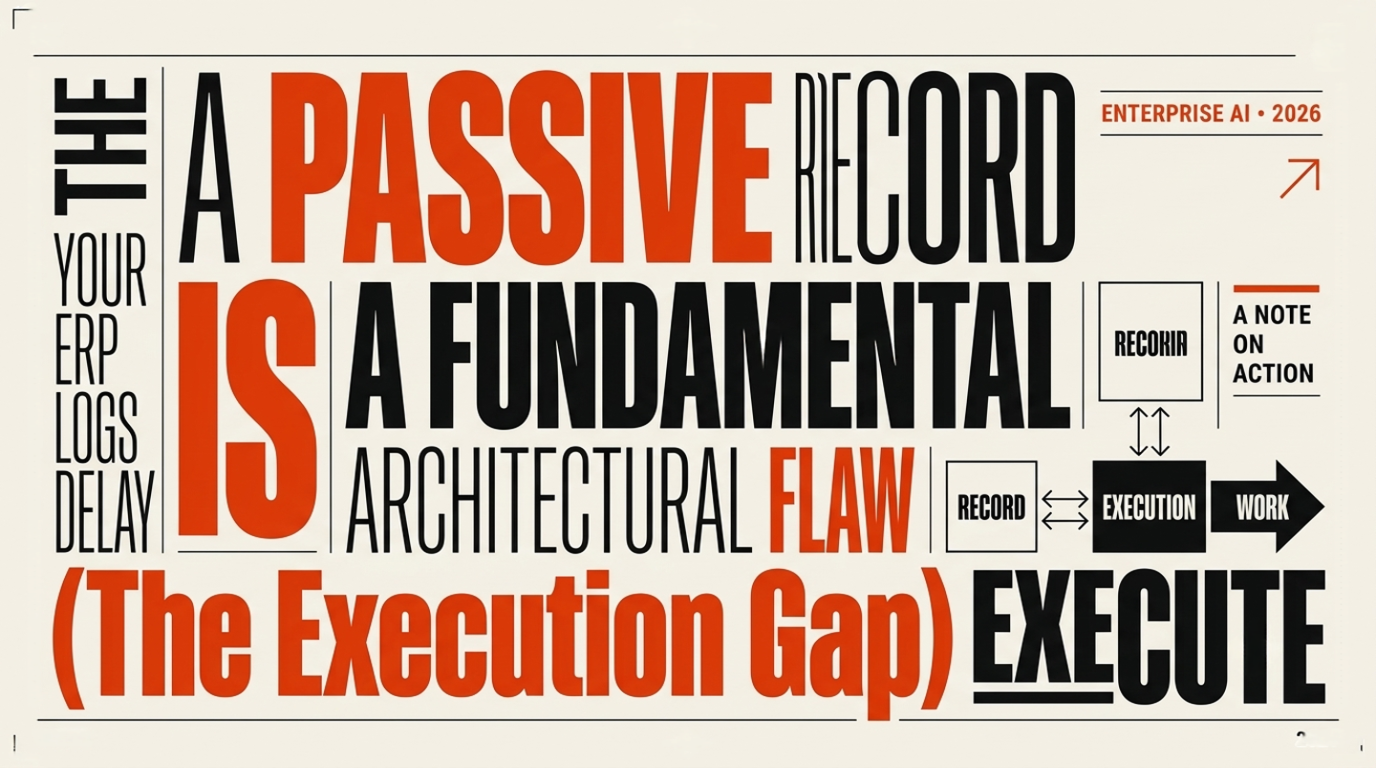
This is the ultimate bottleneck of legacy ERP systems. They hold the data, but they require a human to do the math.
In 2026, enterprise operations are shifting to autonomous execution. By deploying an AI Operating System equipped with specialized agents, GCC industrial leaders are eliminating manual bid scoring.
Here is exactly how the PROCUREMENT.AGENT inside the RocketOps Concrete Engine autonomously reads, scores, and awards construction contracts in milliseconds.
Step 1: Autonomous Ingestion & Data Extraction
The biggest friction point in traditional procurement is unstructured data. Suppliers do not submit bids in perfectly formatted API payloads; they send messy PDFs, WhatsApp messages, and unstructured emails.
When supplier quotes return from an RFQ, the PROCUREMENT.AGENT intercepts them. Because it is powered by a construction-trained Large Language Model (LLM) operating securely on-premise, it does not require humans to manually key the data into an ERP.
The Agent autonomously "reads" the documents and extracts the critical variables:
-
Unit Pricing
-
Delivery Timelines
-
Material Specifications & Compliance
-
Payment Terms
It instantly transforms this unstructured chaos into a normalized, structured data matrix, ready for algorithmic scoring.
Step 2: Multi-Variable Bid Scoring (The Logic Engine)
Awarding a contract in heavy industry is rarely just about finding the lowest price. A supplier offering a 10% discount is useless if their delivery is two weeks late and halts a critical concrete pour.
The PROCUREMENT.AGENT does not just look at the bottom line; it executes a multi-variable scoring matrix based on your company's proprietary business logic.
In milliseconds, the Agent evaluates:
-
Price Variance: How does the bid compare to historical pricing data stored in your SAP or Oracle ERP?
-
Lead Time vs. Critical Path: Does the supplier's delivery window align with the active project schedule in your Primavera system?
-
Supplier Risk Profile: The Agent checks the vendor’s historical reliability score. Have they delivered late in the past? Do they have a high defect rate?
-
Compliance: Does the material spec match the original Bill of Quantities (BOQ)?
(Note: Because this scoring happens via secure, on-premise AI infrastructure, your historical pricing data and vendor risk profiles remain 100% sovereign and protected behind your firewall).
Step 3: Optimization and Split-Awarding
Often, a single supplier cannot fulfill an entire emergency order, or the optimal financial decision requires splitting the contract across multiple vendors. For a human, calculating the perfect split-award across three suppliers with different pricing tiers and delivery capacities takes hours of spreadsheet math.
The PROCUREMENT.AGENT calculates this instantly.
If Vendor A has the lowest price but can only supply 60% of the required steel, and Vendor B is 5% more expensive but can deliver the remaining 40% tomorrow, the Agent autonomously calculates the optimal split. It prioritizes the formula that protects the critical path schedule while minimizing total cost overrun.
Step 4: Autonomous PO Generation & Human Approval
Once the optimal supplier (or combination of suppliers) is selected, the PROCUREMENT.AGENT executes the final tactical step.
It autonomously drafts the Purchase Order (PO) and writes the pending transaction directly into your legacy ERP system.
At this point, the autonomous execution halts and hands control back to the human. The Procurement Director receives a single, unified notification containing the extracted data, the algorithmic scoring logic, and the pre-drafted PO.
The human director does not have to build the spreadsheet, score the risk, or draft the paperwork. They simply review the Agent's math and click "Approve."
The Bottom Line: Elevating the Procurement Director
Deploying the PROCUREMENT.AGENT does not replace your procurement team. It elevates them.
When you remove the manual labor of reading PDFs, building Excel matrices, and doing baseline arithmetic, your procurement directors stop acting as administrative data-entry clerks. They become strategic governors. They spend their time negotiating better annual contracts, building stronger supplier relationships, and steering the high-level strategy of the supply chain.
An AI Operating System doesn't just automate the RFQ; it changes the entire speed at which your enterprise does business.
Frequently Asked Questions (FAQ)
1. Can the PROCUREMENT.AGENT read messy or non-standard supplier PDFs? Yes. Unlike older OCR (Optical Character Recognition) tools that require suppliers to use rigid templates, the Agent is powered by an LLM that understands natural language and unstructured data. It can extract pricing and terms from emails, varied PDF formats, and even WhatsApp logs.
2. Does the AI automatically spend our company's money? No. The PROCUREMENT.AGENT operates on a "Human-in-the-Loop" architecture. It does the heavy lifting: extracting data, scoring the bids, optimizing the split, and drafting the PO. However, the final financial authorization always requires a human click to release the funds.
3. How does the Agent know our business priorities (e.g., speed vs. cost)? The scoring matrix is entirely customizable. During deployment, the Agent is tuned to your specific business logic. If a project is behind schedule, you can weigh "Lead Time" heavier than "Unit Price," and the Agent will autonomously adjust its contract awarding math.
4. Does the Agent write the final decision back into our ERP? Yes. The AI OS provides bi-directional integration. Once the human approves the Agent's recommended PO, the Agent autonomously updates your SAP, Oracle, or local database, ensuring your system of record remains perfectly accurate.